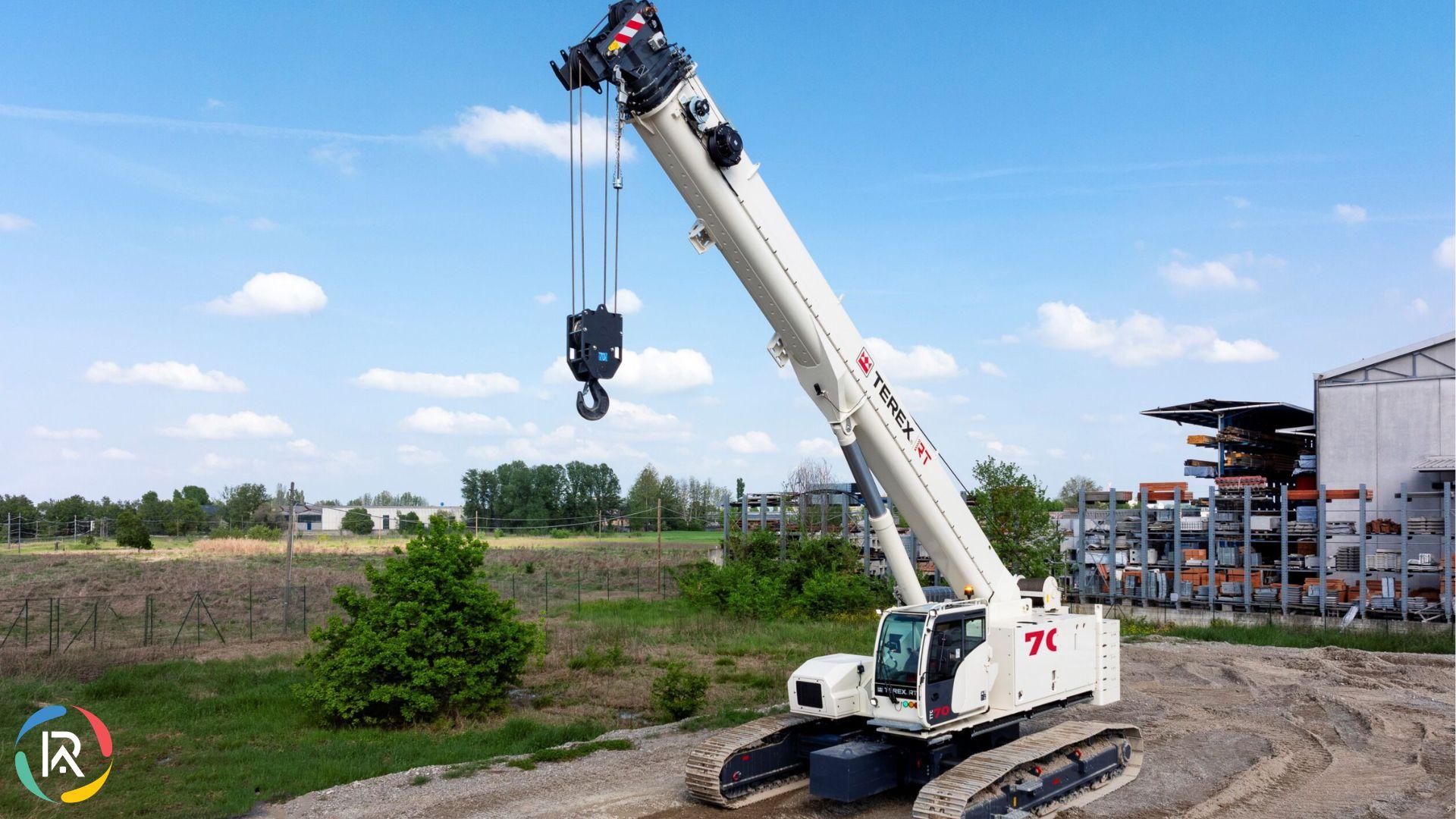
Milan, Italy - Raimondi Cranes S.p.A., a heavy-lifting equipment manufacturer, has expanded its lifting equipment portfolio with the launch of its first telecrawler crane line, engineered by Terex Rough Terrain Cranes. The move marks Terex Rough Terrain Cranes’ return to the crawler crane segment under Raimondi ownership.
The new line debuts with the TTC 70, a 70-tonne telecrawler crane designed, engineered, and manufactured at the company’s rough terrain crane facility in Crespellano, Bologna, Italy. The model is aimed at key markets including the United States, Canada, and Europe, with first deliveries expected during 2026.
Mr. Luigi Maggioni., CEO of Raimondi Group, said, “The TTC 70 represents an important step in the company’s growth as a multi-segment lifting solutions provider. The launch also supports Raimondi’s strategy to expand beyond tower and rough terrain cranes into additional lifting categories.”
The TTC 70 combines crawler mobility with the efficiency and ease of operation associated with rough terrain cranes. Unlike traditional rough terrain cranes that require outriggers and level ground, the TTC 70 operates on crawler tracks, can work on slopes of up to 4 degrees, and offers lower ground pressure for use on uneven or less compact terrain.
The crane features a 70-tonne maximum lifting capacity, 36.8-metre maximum boom length, and 215-metre lifting rope drum capacity. It is powered by Stage V and Stage IIIA engine options, with outputs of 168 kW and 164 kW respectively at 2,200 rpm.
The model also includes TEOS operating software adapted for crawler cranes, T-Link connectivity, electronic hydraulic pump management, a redesigned operator cab, joystick controls, and a remote-control system for full machine operation. These features are intended to improve safety, fuel efficiency, operator comfort, and setup productivity.
Raimondi said the new telecrawler line responds to growing demand from infrastructure, energy, rental, and complex construction applications where mobility, lifting performance, and operation on challenging terrain are increasingly important.


%201.png&w=96&q=75)
%201.png&w=96&q=75)
%201.png&w=96&q=75)
%201.png&w=96&q=75)
%201.png&w=96&q=75)