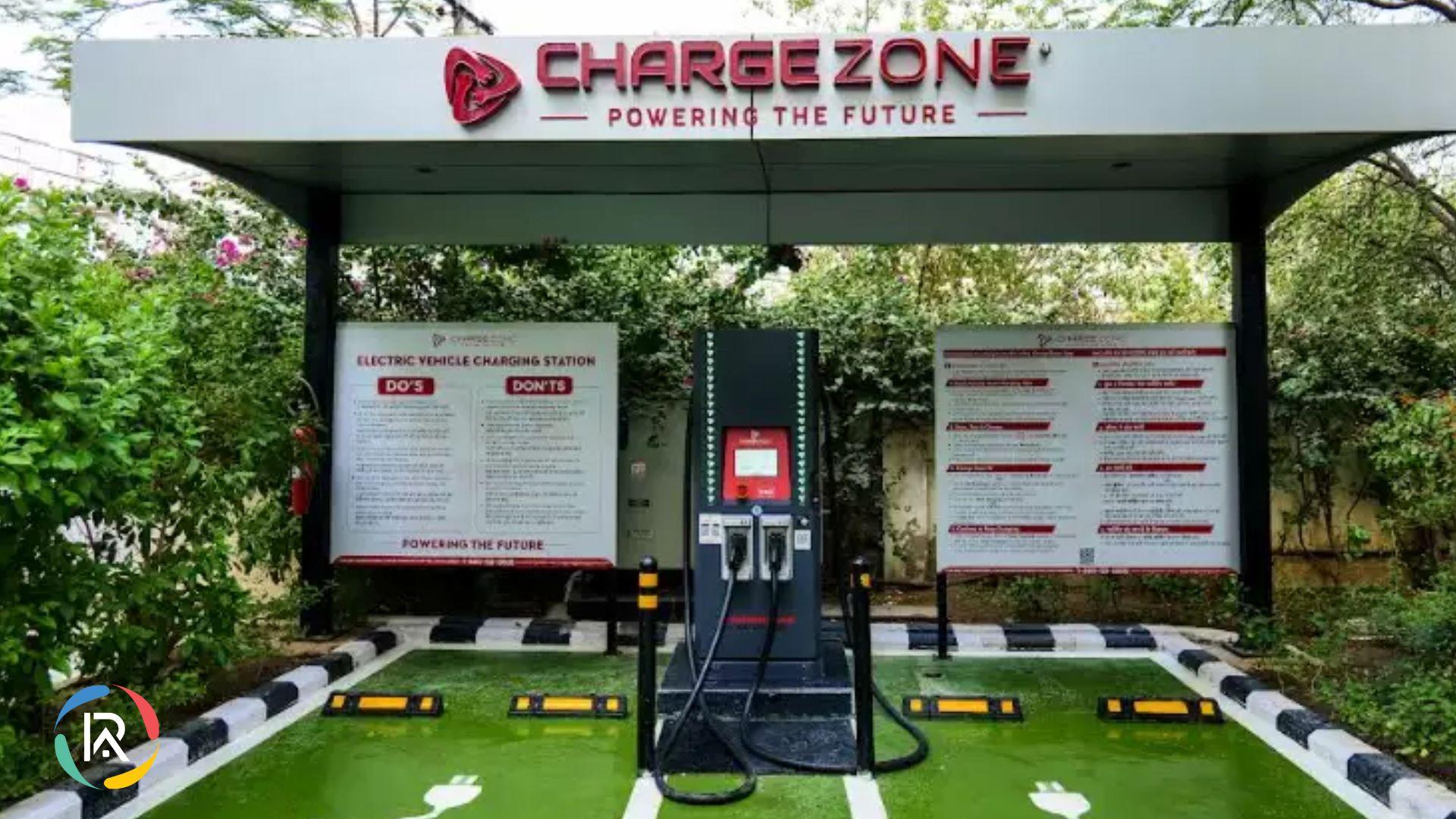
Vadodara- Tecso Charge Zone Private Limited, (ChargeZone) has introduced its innovative Battery Passport System, a digital record that tracks comprehensive information throughout a battery's life cycle. This system aims to promote a shift from linear to circular economies by offering transparent data, ensuring a fair and informed playing field for all stakeholders in the EV battery ecosystem.
The Battery Passport System will optimize battery value for all stakeholders, including EV buyers, manufacturers, economic operators, and recyclers. ChargeZone's Battery-as-a-Service (BaaS) model for large commercial EVs, such as buses and trucks, will cover upfront battery costs, provide transparent energy pricing for defined mileage, and ensure reliable performance metrics. Additionally, the system will enhance battery pack repurposing and recycling through real-time monitoring of critical battery aspects.
Ms. Kartikey Hariyani, Founder and CEO of ChargeZone, said, "We are excited to introduce the Battery Passport System, a transformative innovation for India's EV landscape. This system features advanced financial engineering that separates EV and battery costs, ensuring fiscal viability. Initially focused on electric buses with 200 kWh battery capacity, we aim to establish long-term contracts for Charging-As-A-Service (CaaS) and Energy as a Service (EaaS) in the growing electric bus market. Our value proposition also highlights the repurposing of batteries with residual life for lower duty cycle applications. This strategic approach, supported by our Digital Battery Passport, reflects our commitment to technical excellence."
Mr. Ravindra Mohan, Group Director at ChargeZone, said, "ChargeZone’s Battery Passport System, built on the Industrial IoT 5.0 platform, meets industry standards for accuracy, security, and accessibility of battery information. It covers all aspects, from data verification to battery storage, sharing, and identification, while complying with legal requirements for EV disassembly into batteries and vehicles. Our solution streamlines operations and boosts efficiency for both manufacturers and users, promoting environmental sustainability and supporting a cleaner, greener future."
India's rapid electric vehicle growth is driving the battery storage sector, with projections estimating cumulative battery storage capacity to reach 600 GWh by 2030. To achieve renewable energy targets, the government aims to add approximately 500 GW of renewable capacity by the same year, highlighting the importance of flexible energy solutions like battery storage. The potential for lithium-ion batteries in India from 2022 to 2030 is estimated at around 600 GWh, with recycling volumes expected to reach 128 GWh. Investing in energy storage infrastructure is essential for advancing renewable energy and electric vehicle adoption nationwide.


%201.png&w=96&q=75)
%201.png&w=96&q=75)
%201.png&w=96&q=75)
%201.png&w=96&q=75)
%201.png&w=96&q=75)