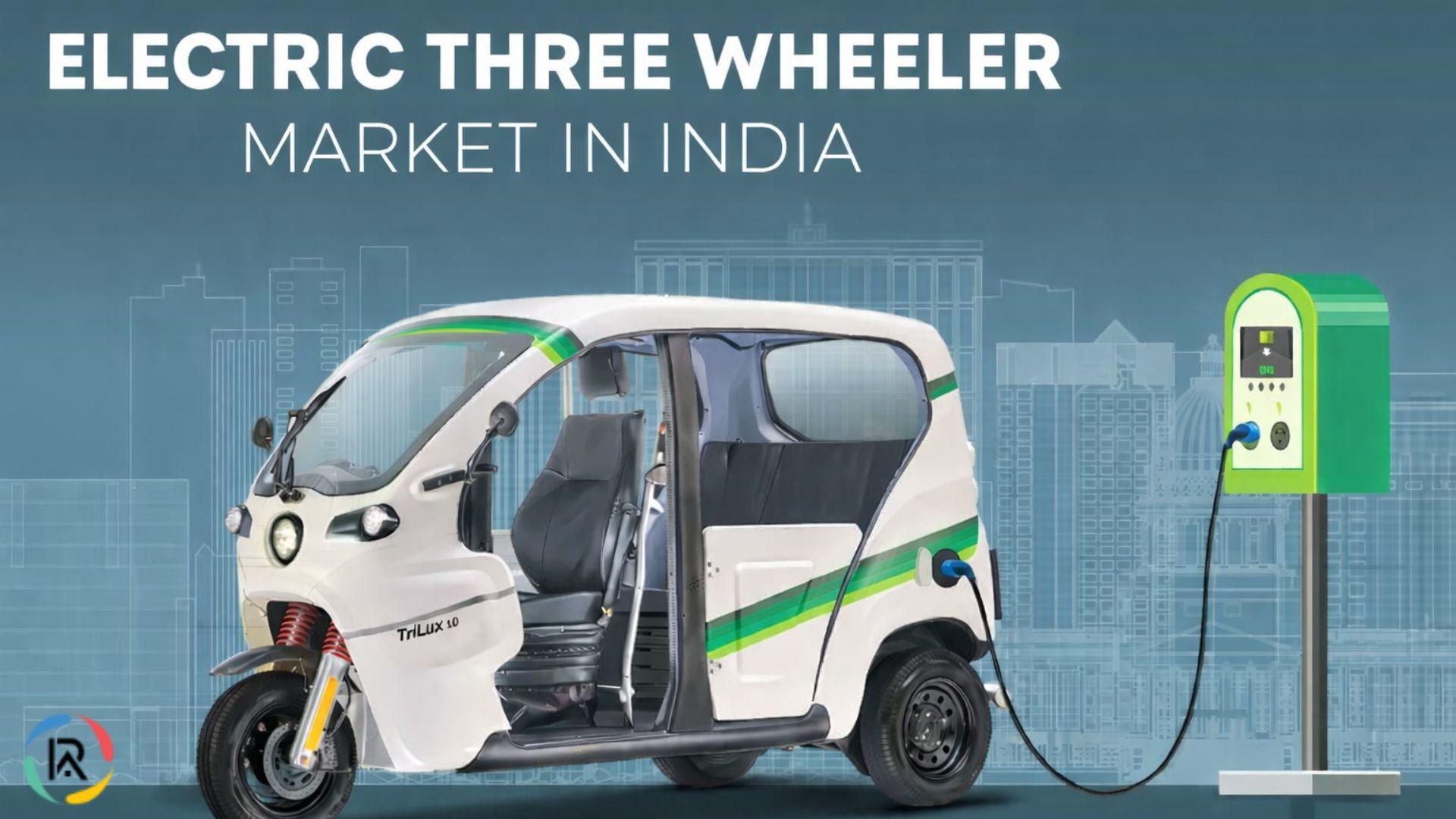
India’s three-wheeler (3W) industry is witnessing one of the fastest electrification transitions in the global light commercial vehicle space. In CY 2025, electric three-wheelers (E3Ws) captured approximately 60.9% of total three-wheeler sales, firmly positioning EVs as the dominant powertrain in the segment. What began as a policy-supported alternative has now evolved into a market-driven structural shift.
The broader industry has moved well beyond pre-pandemic volumes, supported by strong urban mobility demand, expansion of shared auto services, rapid growth in last-mile logistics, and improving retail and fleet financing access. However, the defining narrative of 2025 is not just recovery—it is electrification leadership.
Cost Economics: The Core Catalyst
The primary driver of EV adoption in India’s three-wheeler market is superior operating economics.
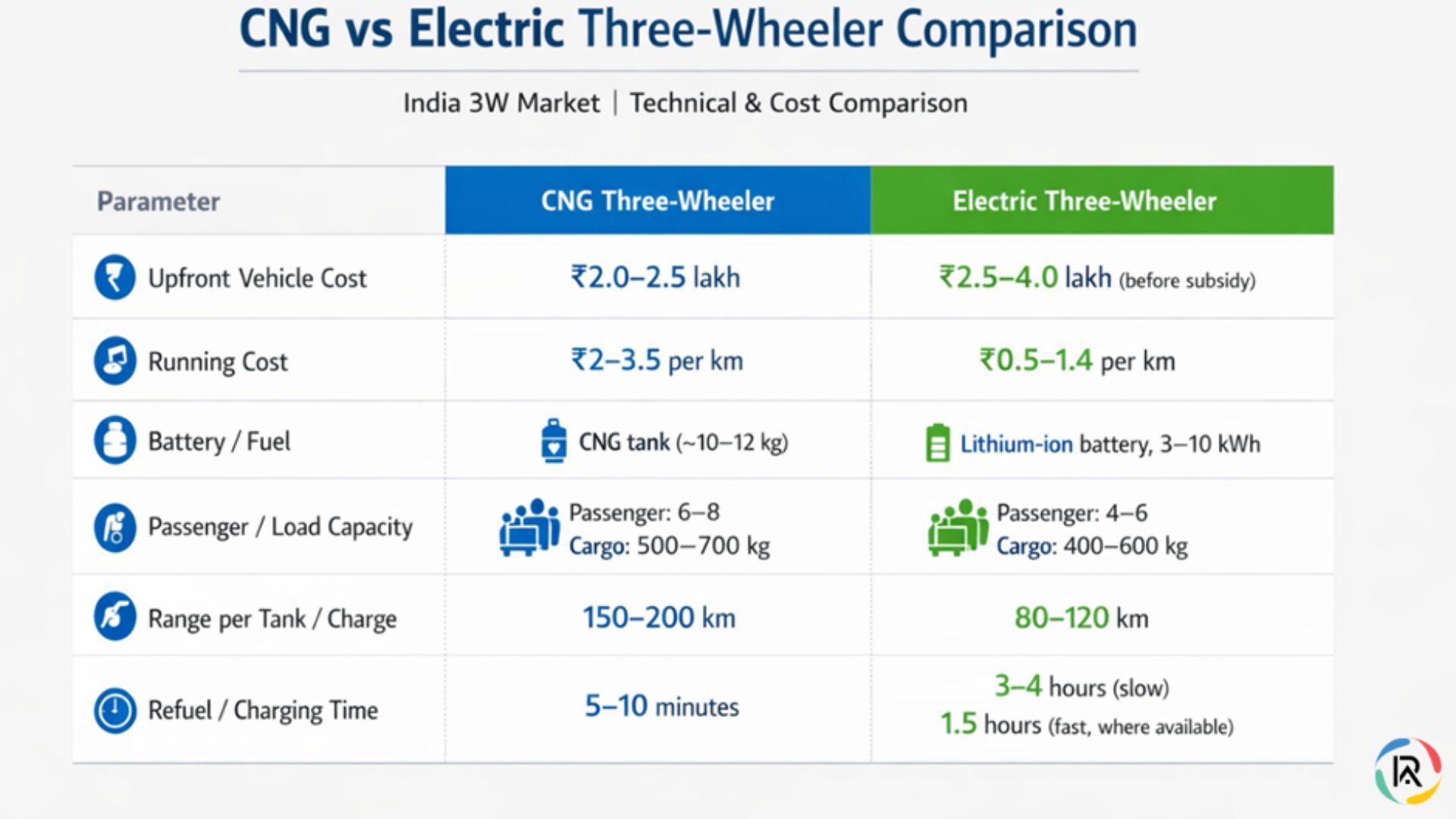
CNG three-wheelers typically incur running costs of ₹2–3.5 per kilometre, depending on fuel prices and efficiency. Electric three-wheelers, by contrast, operate at significantly lower costs of ₹0.5–1.4 per kilometre.
With CNG prices fluctuating between ₹75–₹95 per kg across states, driver profitability is increasingly sensitive to fuel cost volatility. EVs offer predictable and lower energy expenses, along with reduced maintenance due to fewer moving parts. For high-utilisation commercial operators, this translates into improved margins and faster capital recovery.
Although electric models carry a higher upfront price before subsidy, total cost of ownership (TCO) remains attractive due to lower daily running costs. Importantly, CNG vehicles do not benefit from central purchase incentives, while EVs continue to receive structured government support.
Policy Momentum Strengthening the Shift
Government policy has reinforced the economic case for electrification. The PM E-DRIVE scheme, with a financial allocation of ₹10,900 crore, provided battery-linked incentives for electric two- and three-wheelers.
The scheme offered:
- ₹5,000 per kWh subsidy in FY2025
- ₹2,500 per kWh subsidy in FY2026
- Incentive support for electric 3Ws until March 2026
- Continued EV ecosystem backing through 2028
In the L5 electric three-wheeler category, subsidy allocations were nearly fully utilised, reflecting strong demand momentum and rapid uptake across passenger and cargo segments.
CNG vs Electric: Competitive Realignment
CNG three-wheelers continue to offer longer driving range (150–200 km per tank) and quick refuelling times of 5–10 minutes. They also maintain slightly higher passenger and cargo capacity in certain configurations.
Electric three-wheelers, however, deliver a clear advantage in running cost, zero tailpipe emissions, lower noise levels, and reduced servicing requirements. Typical EV range stands at 80–120 km per charge, with charging times between 3–4 hours using standard chargers and shorter durations with fast-charging solutions.
As charging infrastructure expands and battery technology improves, the operational limitations of EVs are steadily declining.
Fast Charging Enhancing Commercial Viability
The expansion of DC fast-charging networks and proprietary rapid-charging technologies is improving asset utilisation for electric three-wheelers. Reduced charging time allows operators to increase daily trip frequency and revenue generation, strengthening the commercial case for fleet electrification.
Charging infrastructure growth is particularly critical in metro and Tier-1 cities, where higher daily utilisation supports faster EV payback cycles.
Expected Electrification Levels by 2030
With electric vehicle penetration already at around 60.9% in 2025, India’s three-wheeler market is set for even deeper electrification over the next five years.
By 2030, electric three-wheelers are projected to capture approximately 80–90% of total 3W sales. In metro cities, the urban passenger auto-rickshaw segment could surpass 90% EV penetration, driven by lower operating costs and regulatory support. Cargo three-wheelers are also expected to witness rapid electrification, supported by growing e-commerce logistics demand and fleet-led procurement strategies.
While CNG models may continue operating in select regions with strong gas infrastructure and longer route usage, their overall market share is expected to decline gradually. With strong cost economics, expanding charging networks, and sustained policy backing, India’s three-wheeler segment is on track to become one of the most electrified commercial vehicle categories globally.


%201.png&w=96&q=75)
%201.png&w=96&q=75)
%201.png&w=96&q=75)
%201.png&w=96&q=75)
%201.png&w=96&q=75)